Case Study · Steelwork Roof Design

Education City
Cultural Centre

Doha, Qatar — 2022

Architect Diller Scofidio + Renfro
Scope LOD 300 Structural Roof
Delivered May 2022
Scroll to explore
Education City Cultural Centre Steelwork Roof · Doha

Design Documentation

From architectural surface
to engineered structure

Project Overview

A women's cultural centre in Education City, Doha

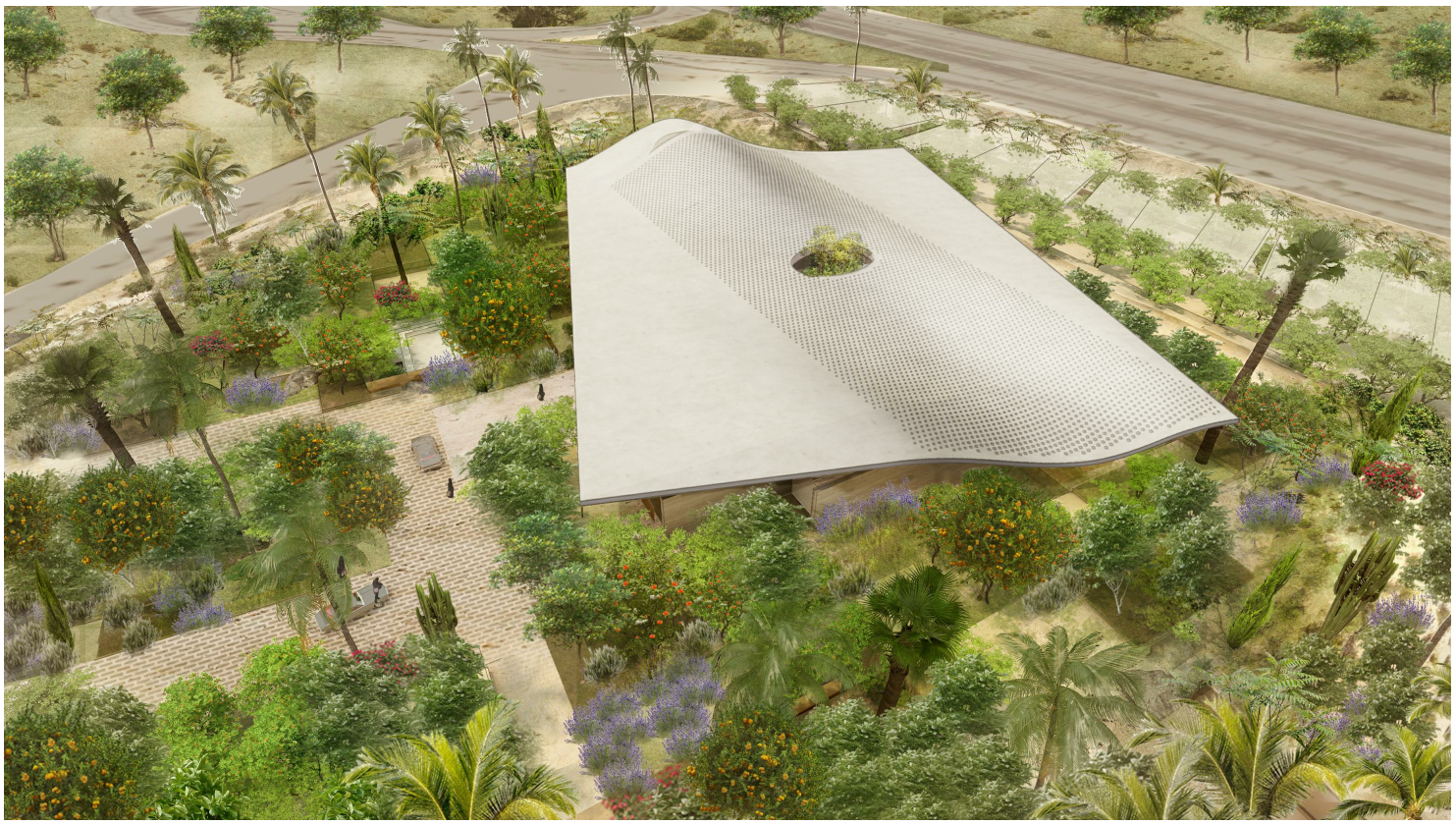
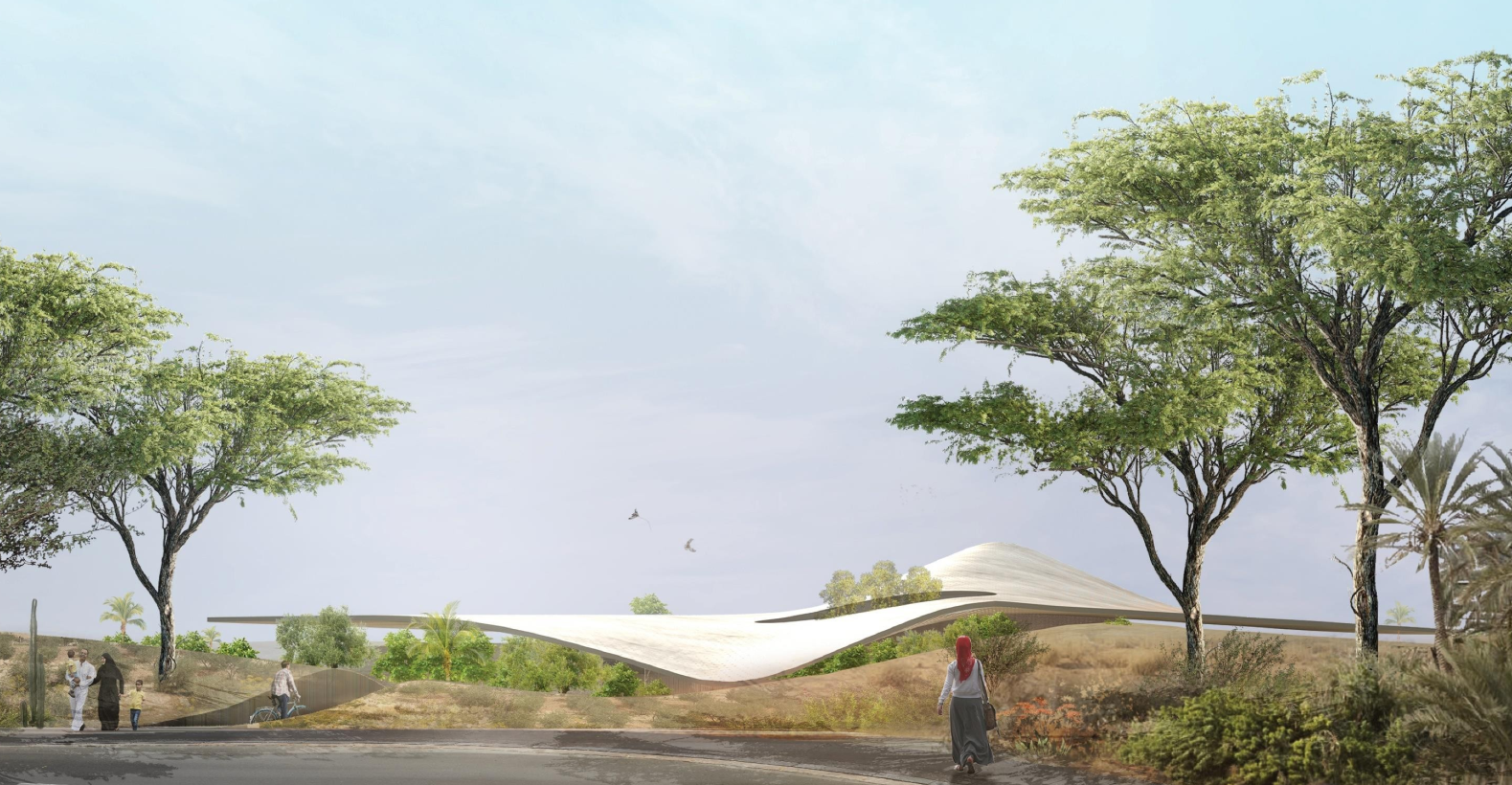
A women's cultural and religious centre in Education City, Doha, Qatar — designed by Diller Scofidio + Renfro (DS+R). The building functions as a parish-type centre: space for women to study religion, attend mass, and gather as a community.

Maffeis' scope was to take the architect's doubly-curved roof surface and transform it into a LOD 300 structural model for the steel roof — fully engineering the geometry so that it would actually stand up, within the tight constraints of a fixed roof thickness and an immovable field of 5,400 daylight cones.
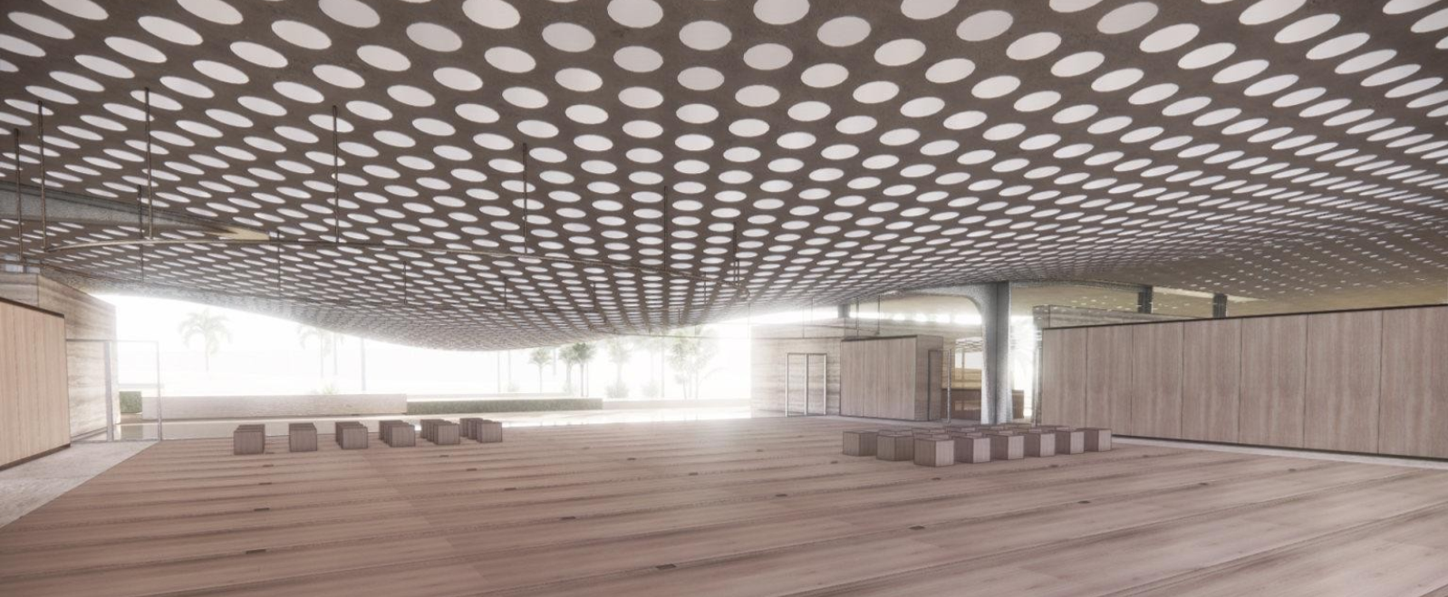
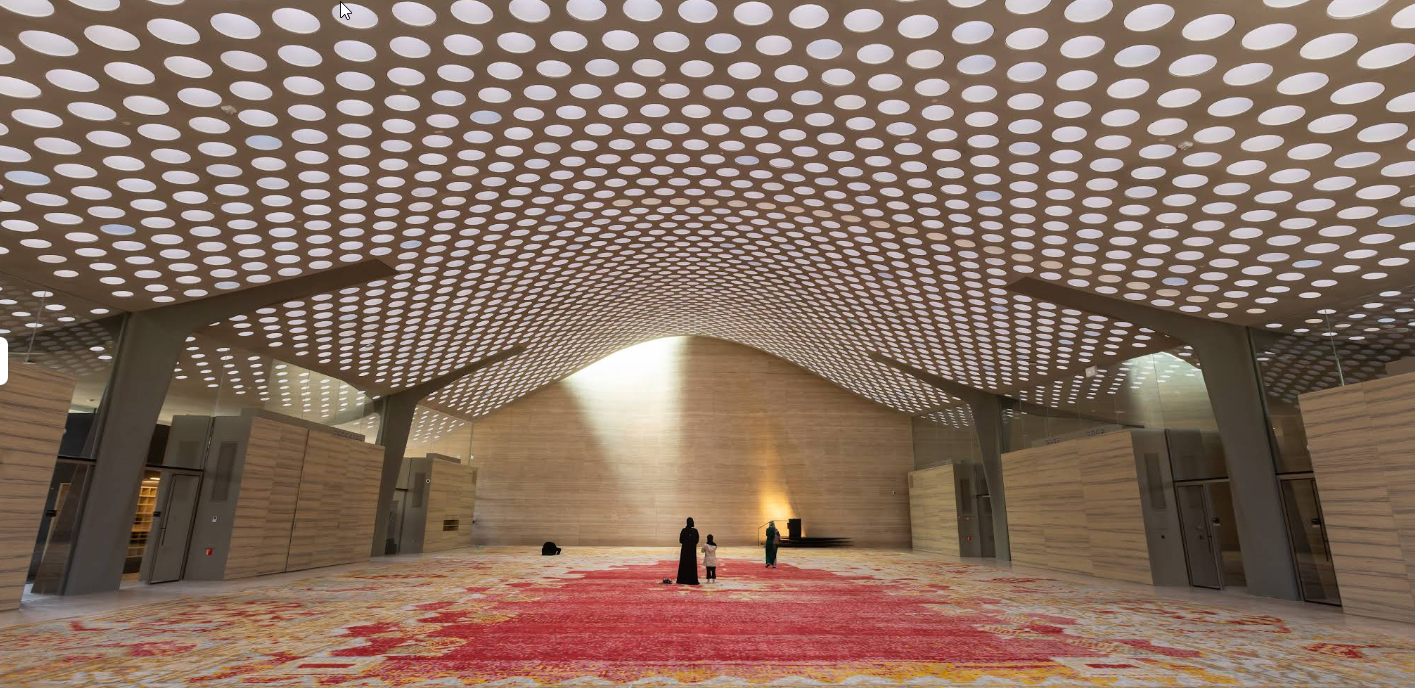
Education City Cultural Centre

The Architectural Surface

A doubly-curved roof with 5,400 daylight cones

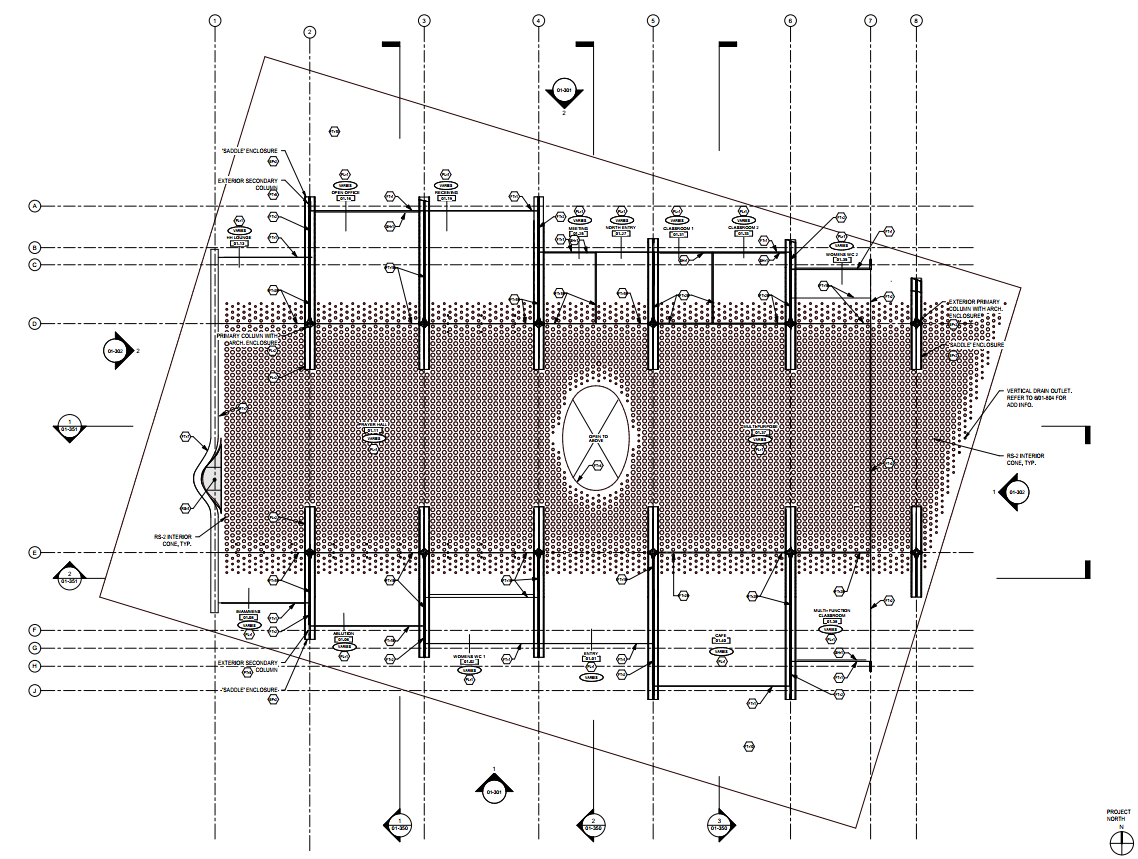
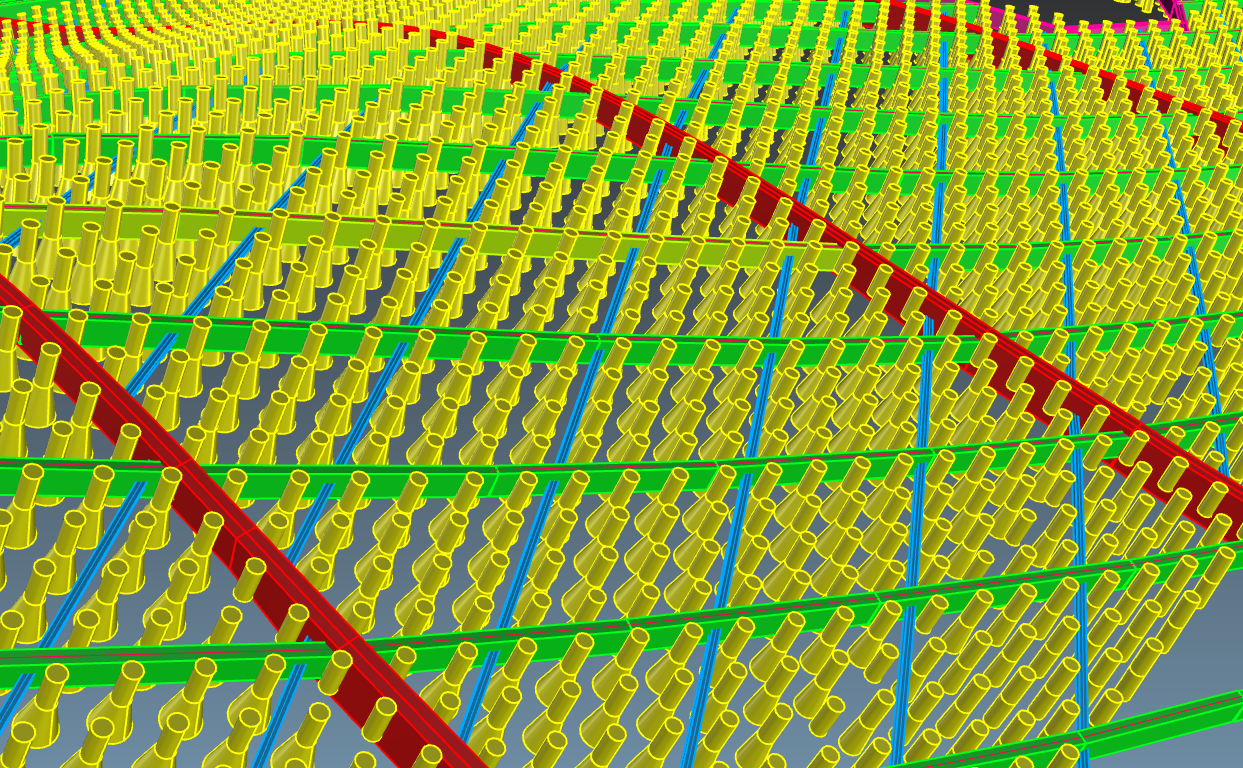
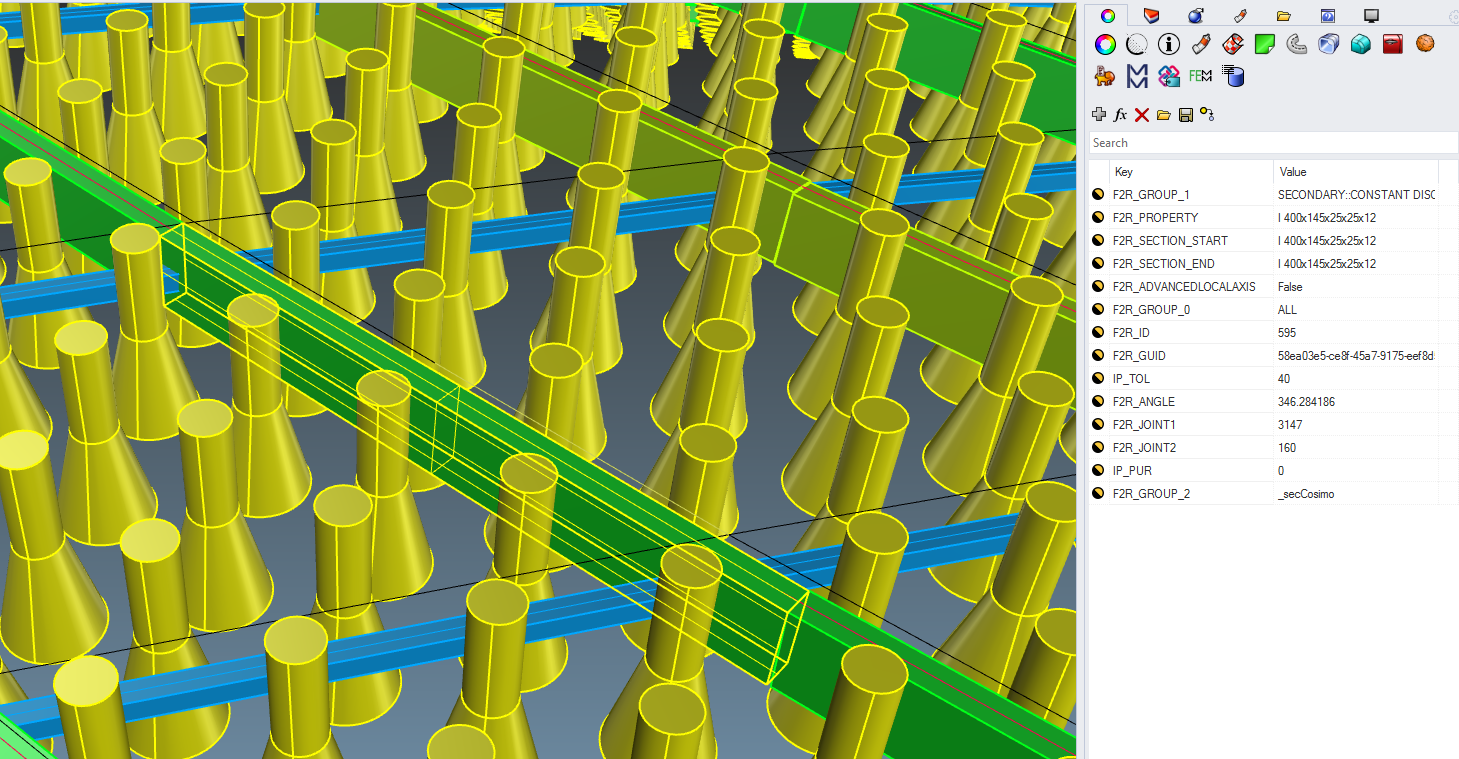
DS+R provided two surfaces — one above the other — forming the roof sandwich. Running through both surfaces are ~5,400 cylindrical light cones arranged on a triangular grid at 625 mm spacing, bringing natural daylight into the interior from above. Each cone is double-glazed with two glass skins. They were a fixed architectural input: they could not be moved.

Roof surface plan
Reflected ceiling plan
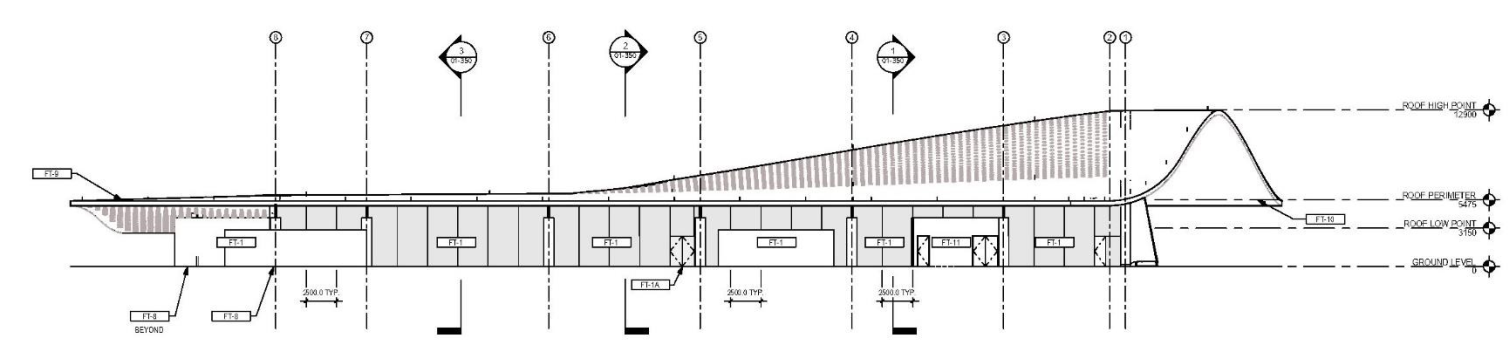
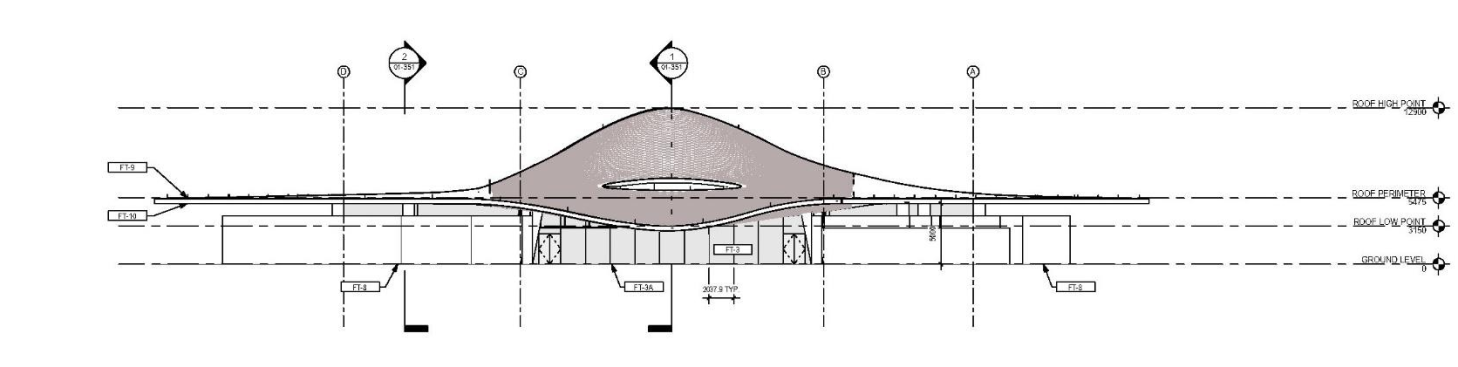
North elevation
East elevation

Tender Design

The original MERO space frame was unbuildable

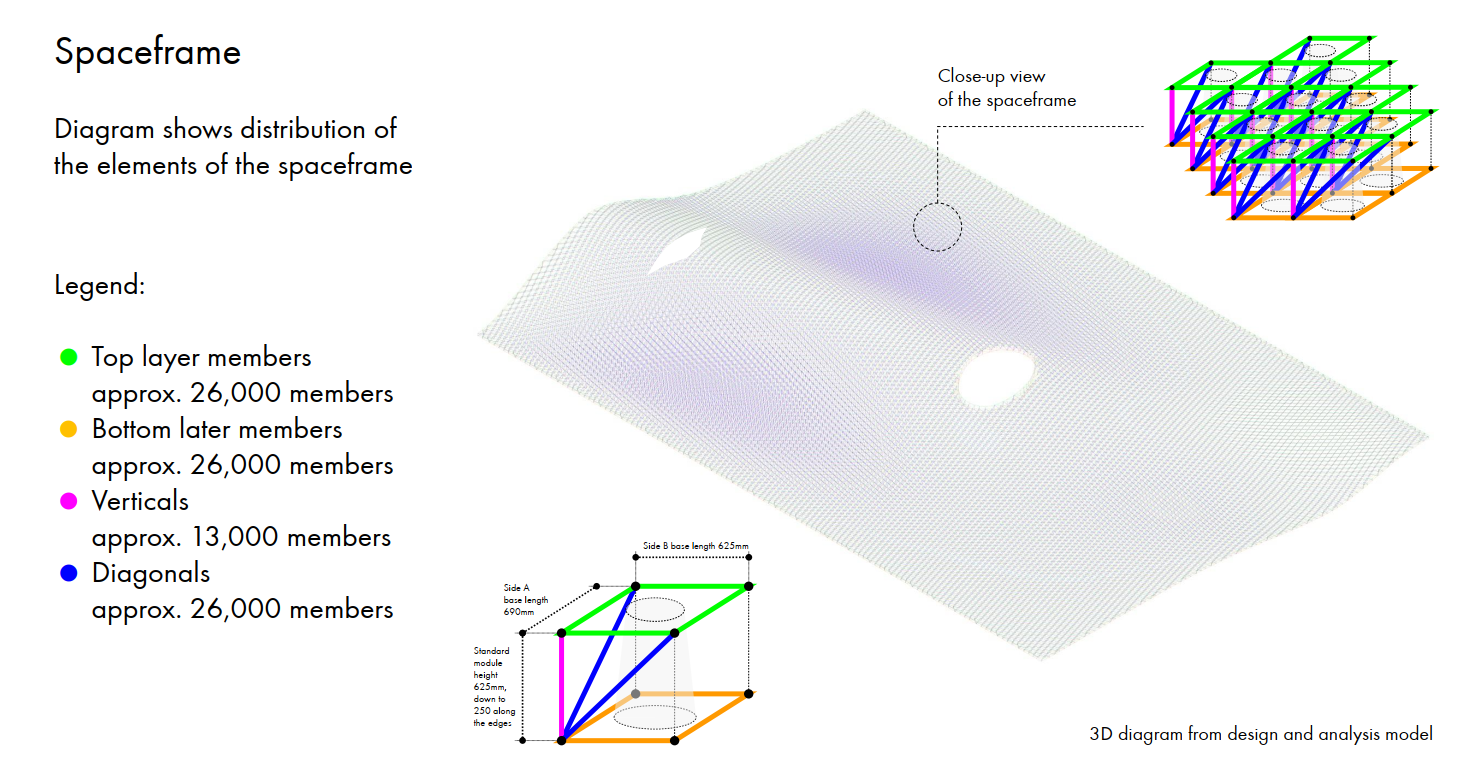
The tender design by Werner Sobek called for a MERO-type space frame: a light structure made of round tubes connected by machined spherical nodes — one sphere on each side, a steel rod between. Implementing this cone-by-cone across the entire roof was impractical and prohibitively expensive. Specialised manufacturers either refused to bid or priced it out of reach. DS+R's cassette system had the same problem — every cassette was custom due to the doubly-curved geometry.

MERO space frame tender design
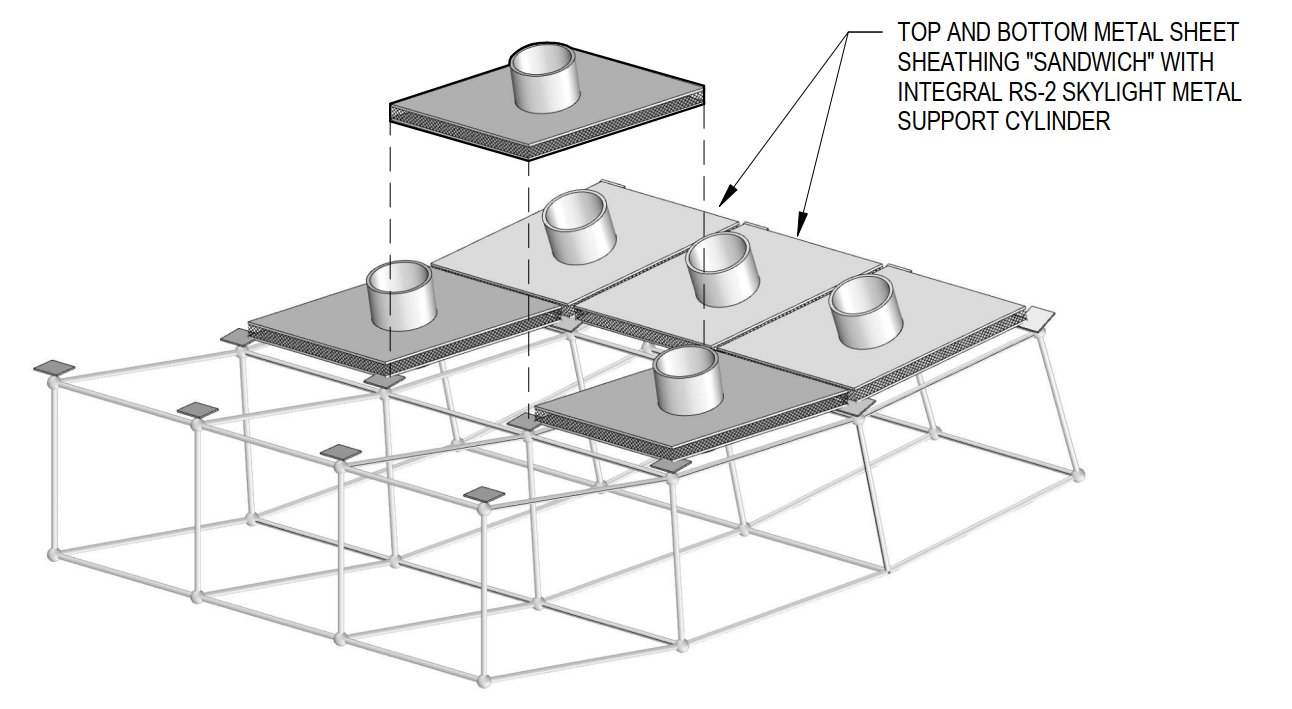
Cassette system issues

Maffeis Design Response

Custom welded steel — a value-engineered alternative

Maffeis proposed a custom welded steel structure with Kingspan insulated corrugated deck on top and stone tile finish over the waterproofing assembly. The fundamental challenge: the cylindrical cones occupied precisely the space where the primary steel beams needed to go — and they could not be relocated.

Maffeis design response
Value engineered steel structure

The Diagrid Solution

Three-level diagrid with rotated primary beams

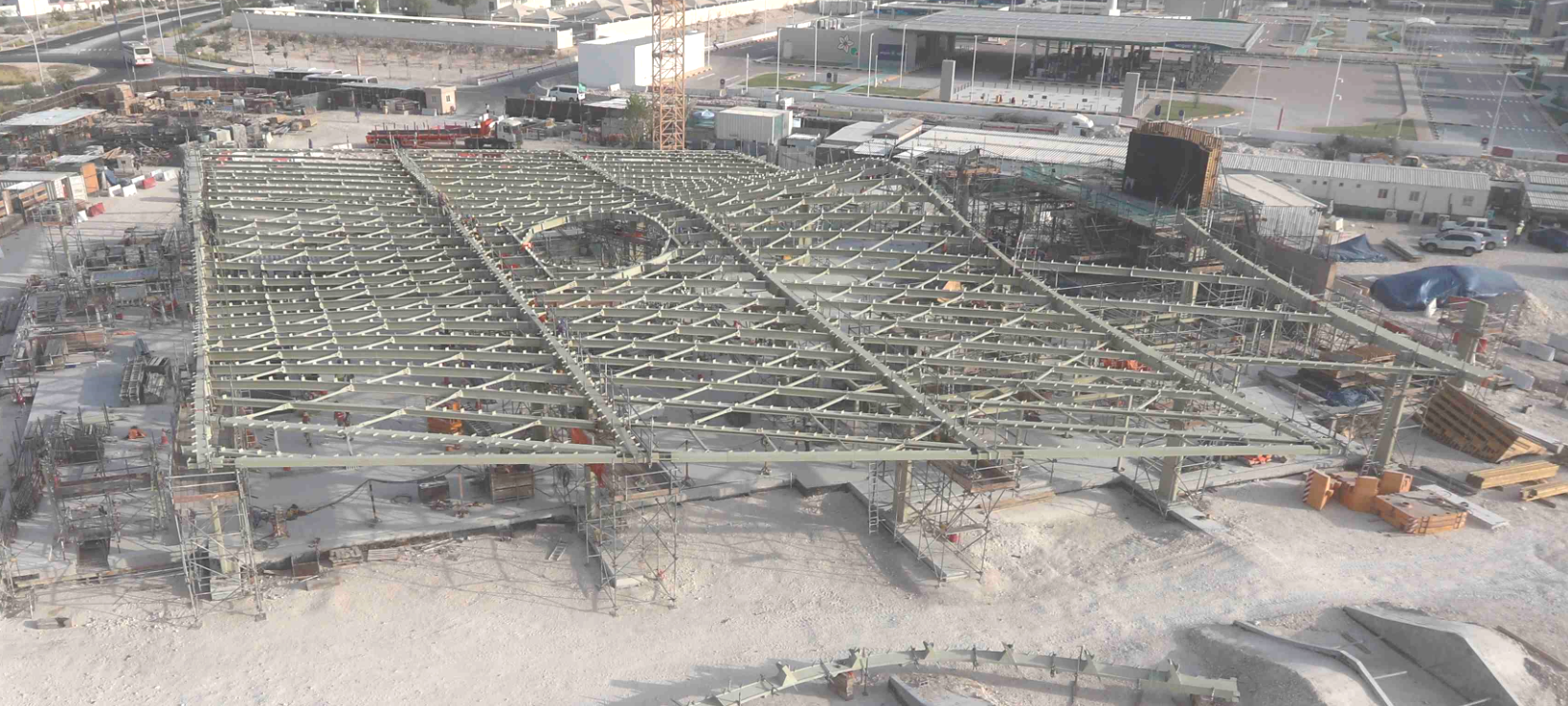
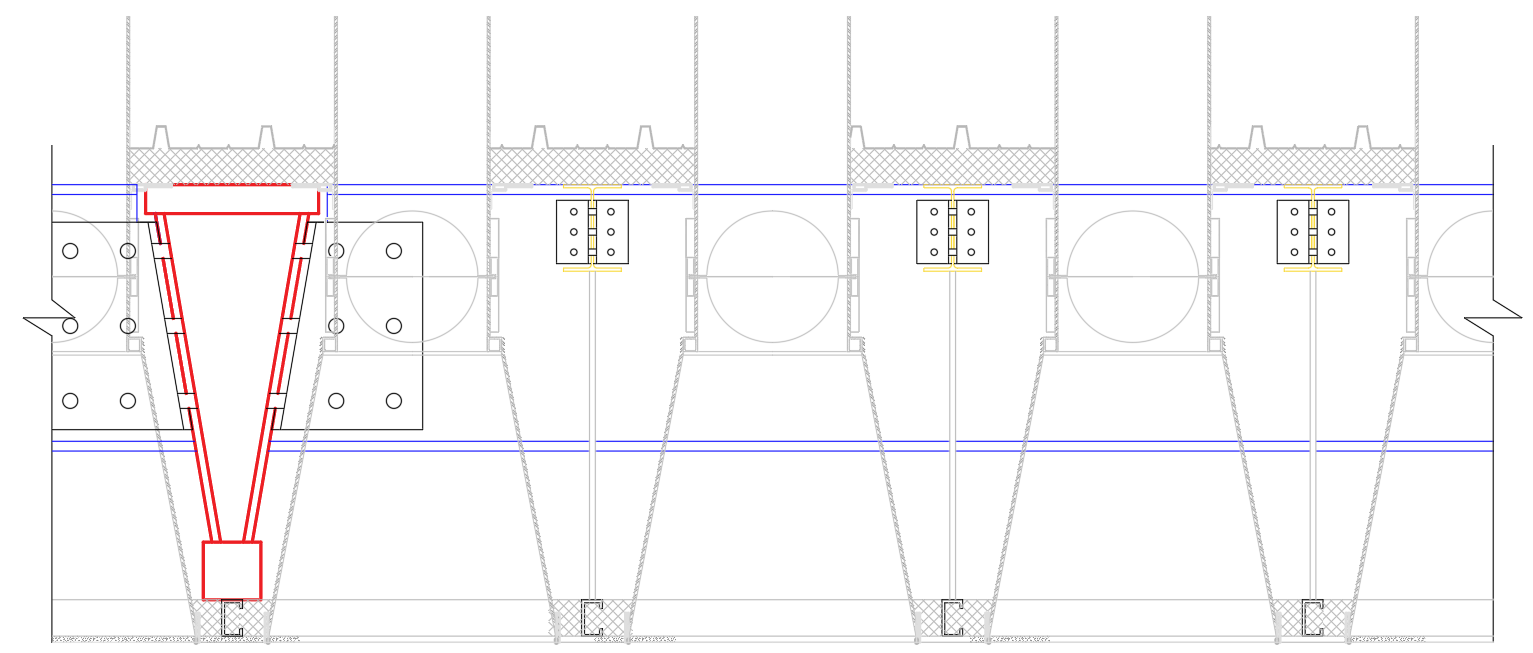
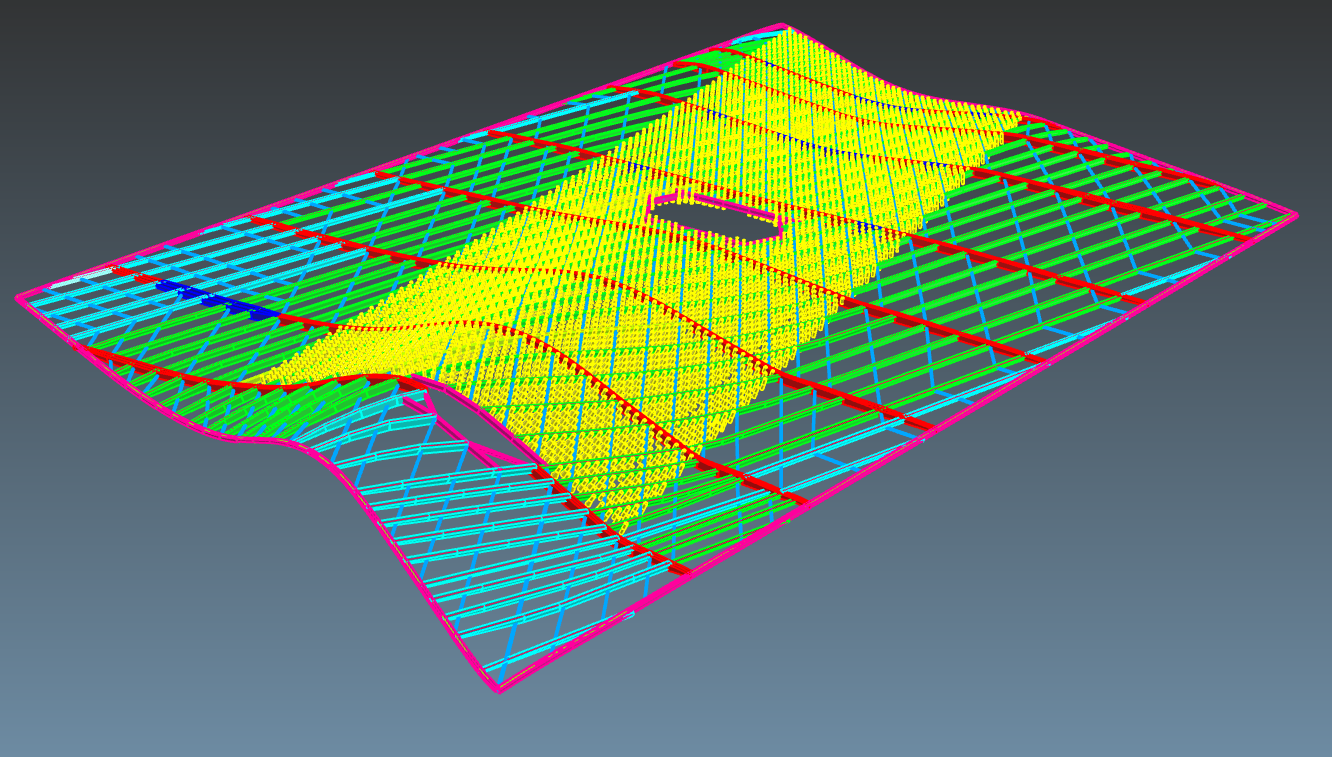
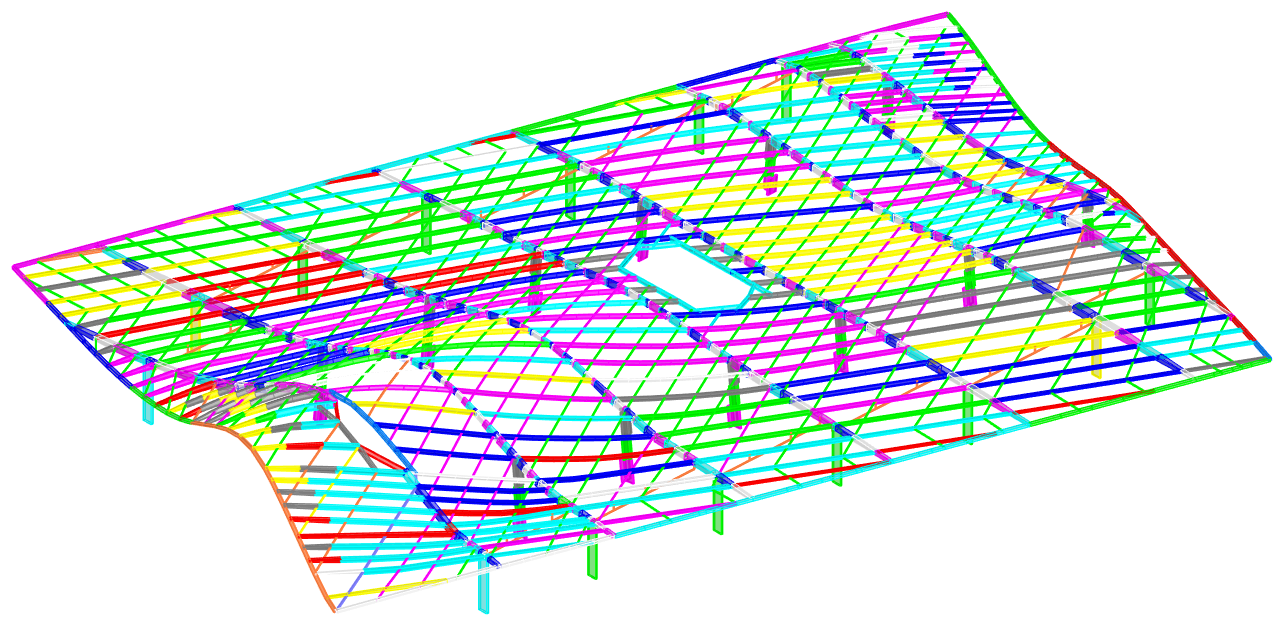
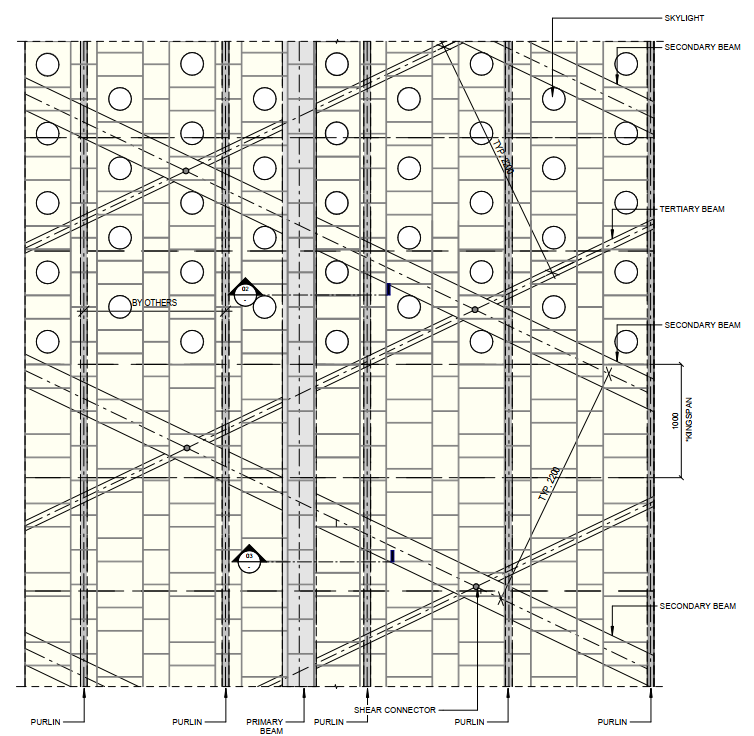
To route the steel framing around the cones, Maffeis designed a three-level diagrid: primary grid (red), secondary (green), and tertiary (yellow). Because there was no straight path for primary beams between the cones, the beams had to be rotated — instead of sitting vertically in the standard orientation, they were tilted to squeeze through the available gaps. Without this rotation there would not have been enough steel section depth to carry the loads.

Diagrid overview
Primary diagrid (red)
Secondary grid (green)
Tertiary grid (yellow)
Combined framing model

Span and Section Challenges

12-metre spans within a fixed roof thickness

In the top-left corner of the roof, spans reached 12 metres — resulting in beams that were very deep and stocky. The overall roof thickness was an architectural constraint that could not be increased, so the engineering had to work within a fixed envelope. Cantilevered edges also had to remain slender to match the architectural intent, while carrying significant loads.

Structural model — long spans
Section depth analysis

Workflow

Rhino → Excel → SAP2000 → Revit, iterated ~20 times

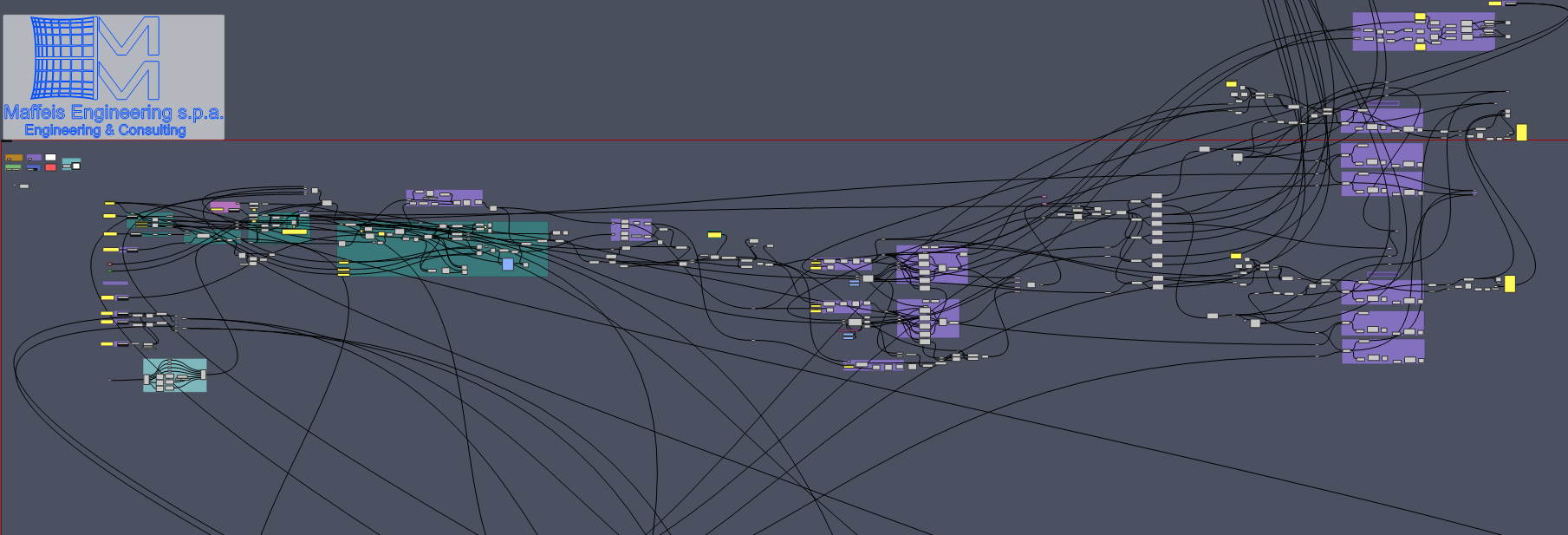
The project ran in 2021–2022, before Fenix existed. The workflow was entirely manual: geometry defined in Rhinoceros + Grasshopper, beam positions exported to Excel and sent to the structural engineer, SAP2000 analysis run and beam sizes returned via Excel, then the cycle repeated approximately 20 times. Finally, geometry and all parameters were pushed from Rhino into Revit families using Revit Rhino Inside — one of Maffeis' earliest uses of this tool.

Grasshopper parametric model
Rhino Inside Revit output

LOD 300 — Scope Definition

Engineered geometry: real profiles verified by analysis

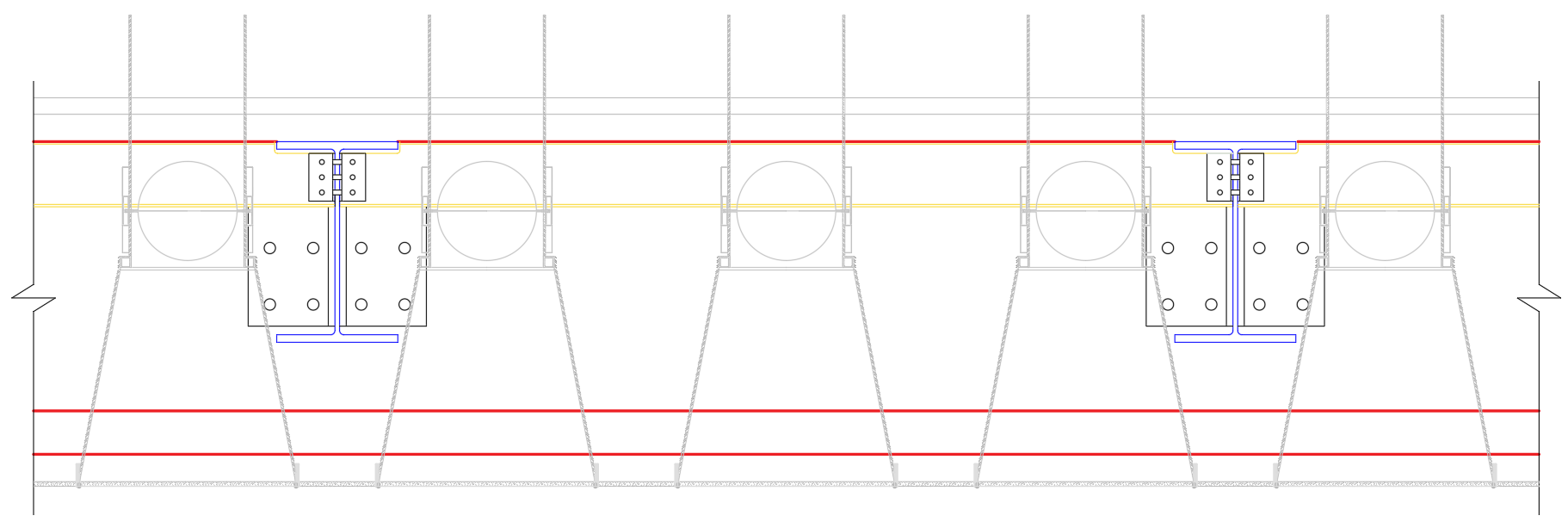
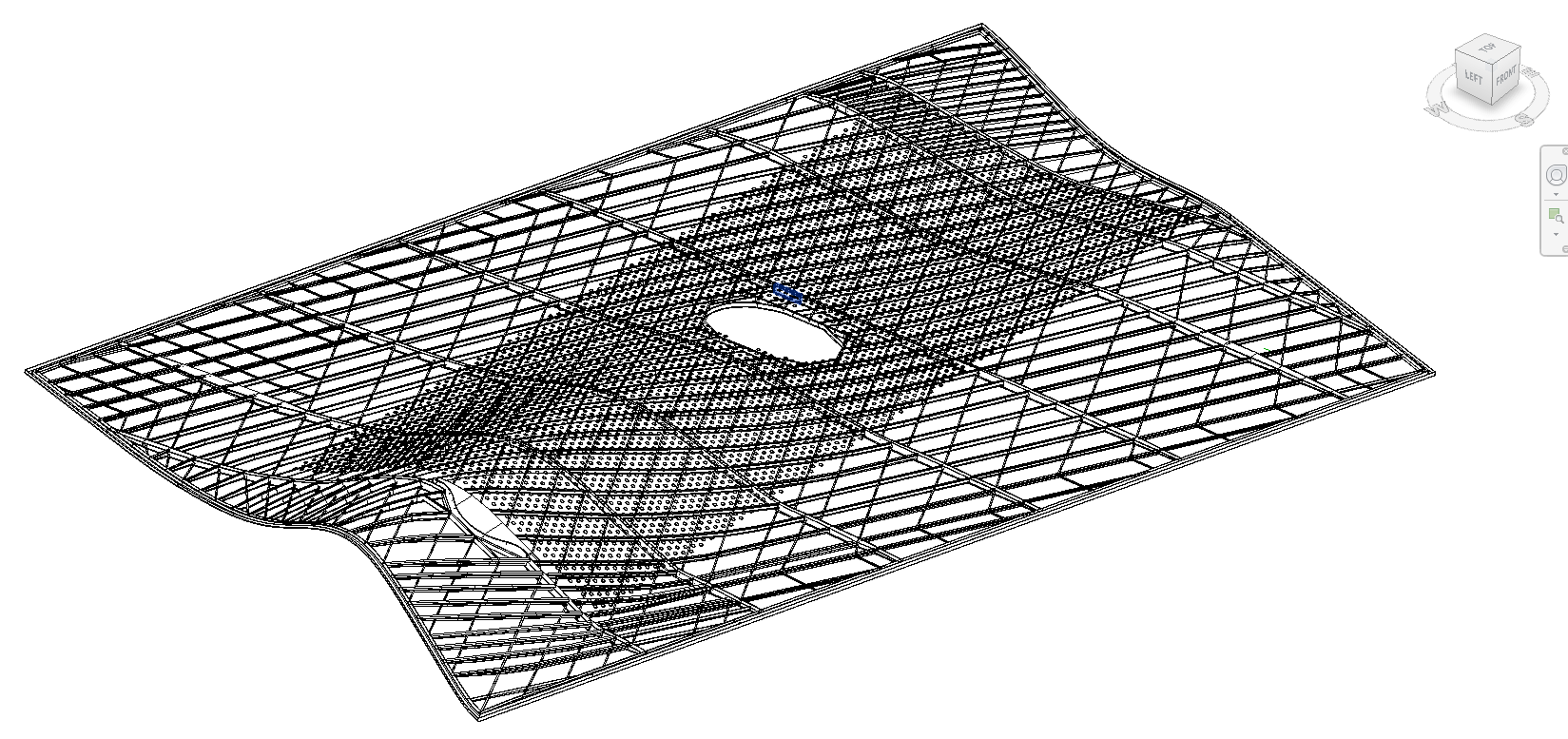
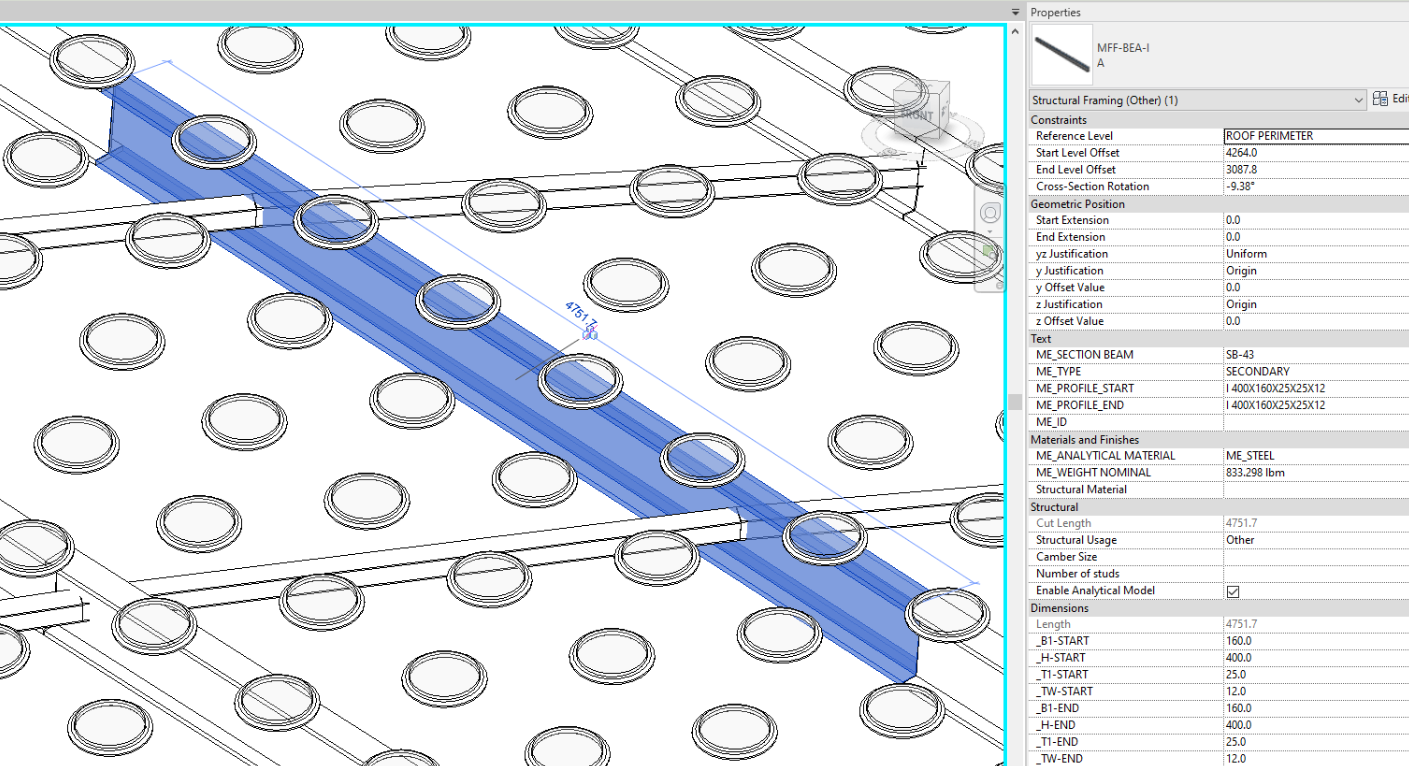
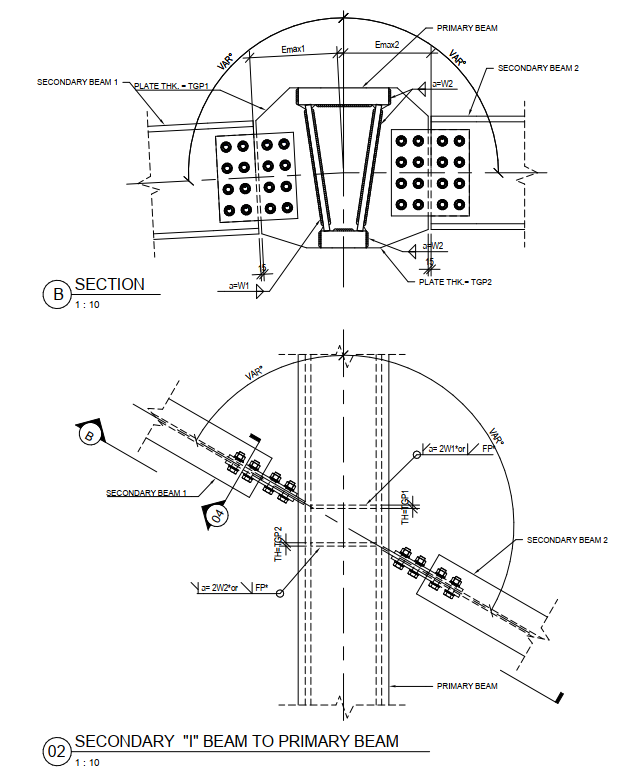
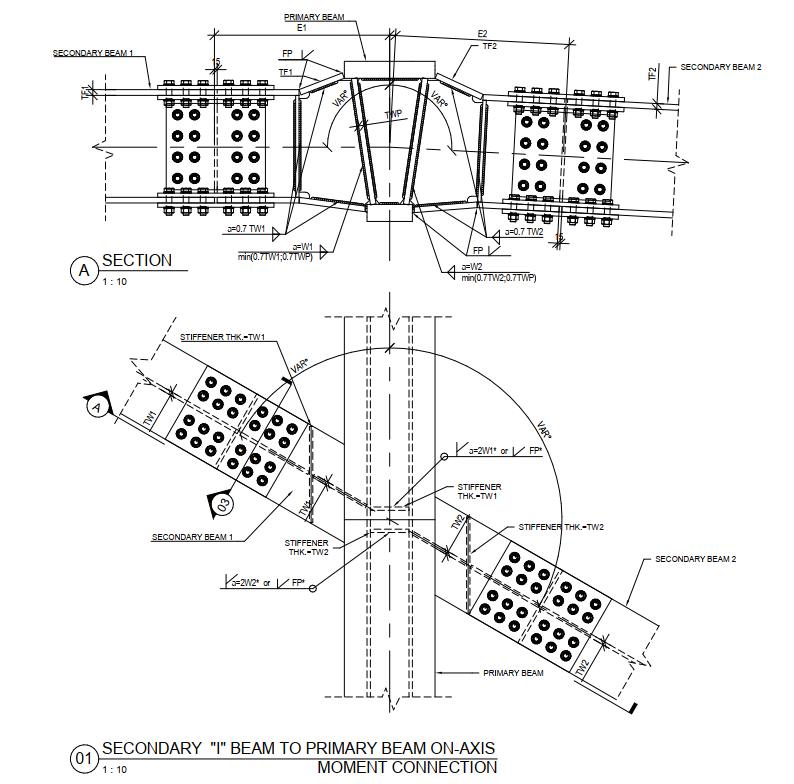
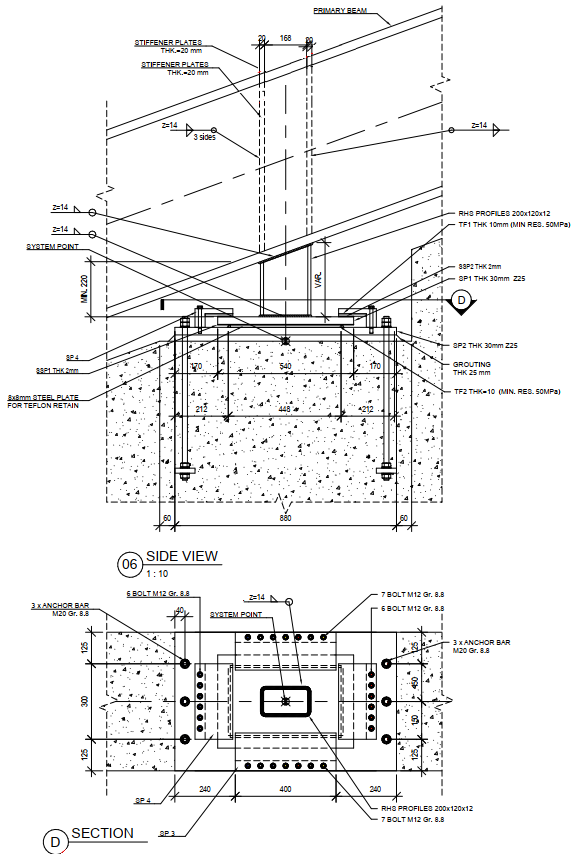
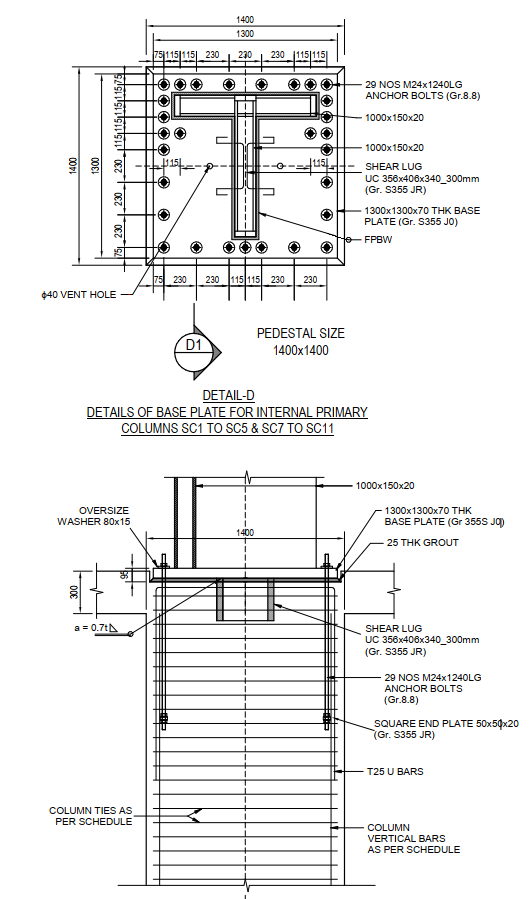
Maffeis' deliverable was an LOD 300 model: real section profiles (IPE, RHS, bespoke welded sections) sized by structural analysis, with connection typologies engineered and dimensioned. The doubly-curved geometry was fully resolved so that every beam had a verified cross-section and a defined orientation.

LOD 400 — the detailed connection design (bolts, weld sizes, gusset plates, splice details) — was carried out by the steel subcontractor in Tekla, using Maffeis' model as the geometric and structural baseline. The handoff boundary was deliberately clean: Maffeis owned the structural truth; the fabricator owned the fabrication detail.

LOD 300 Revit model
Beam profiles and sections
Connection typology detail
Revit model — full roof

BIM Data Chain

Rhinoceros → Excel → SAP2000 → Revit → Tekla

The full data chain: Rhinoceros (geometry) → Excel (positions) → SAP2000 (structural analysis) → Excel (beam sizes back) → Rhinoceros (updated model) → Revit via Rhino Inside (LOD 300 BIM) → IFC / Tekla (LOD 400, by others). Data passed through Revit before going to Tekla because that was where the parametric alignment data — frame depths, widths, thicknesses, beam orientations — lived.

SAP2000 structural model
Revit to Tekla handoff

Cladding Build-Up

Seven layers from steel to stone

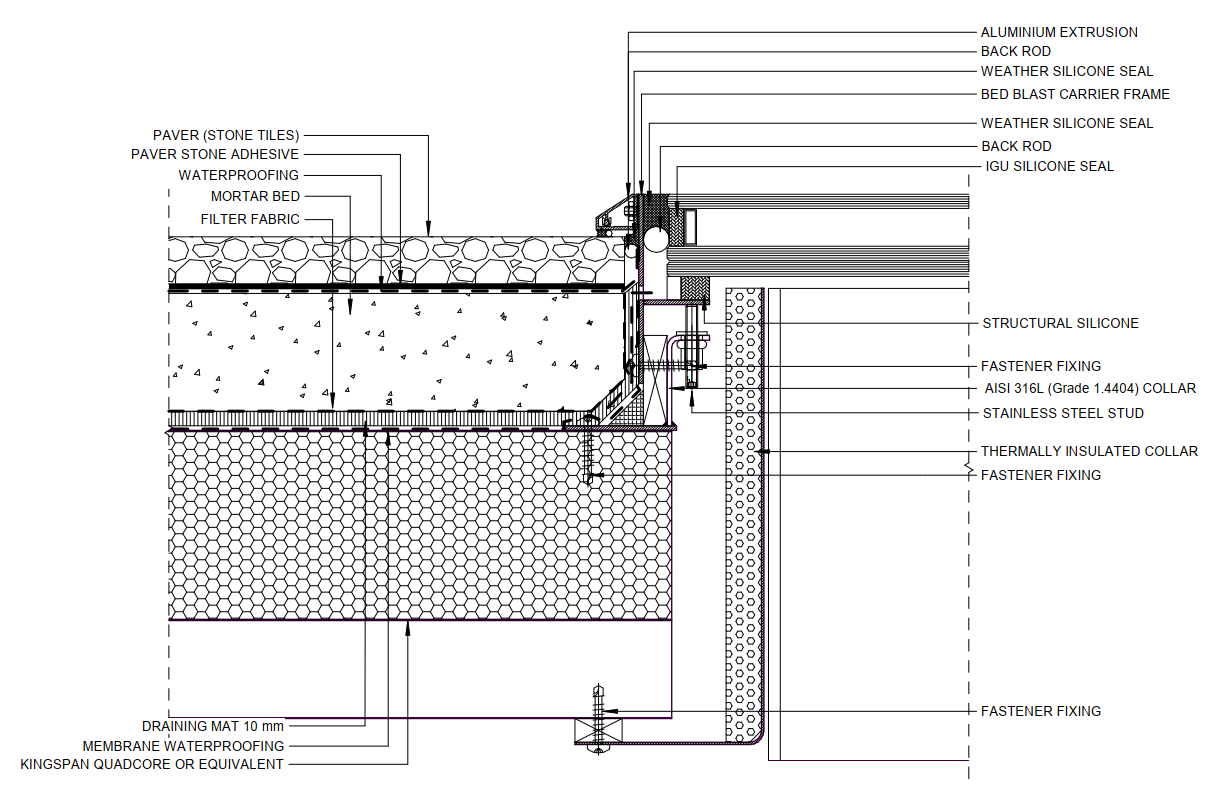
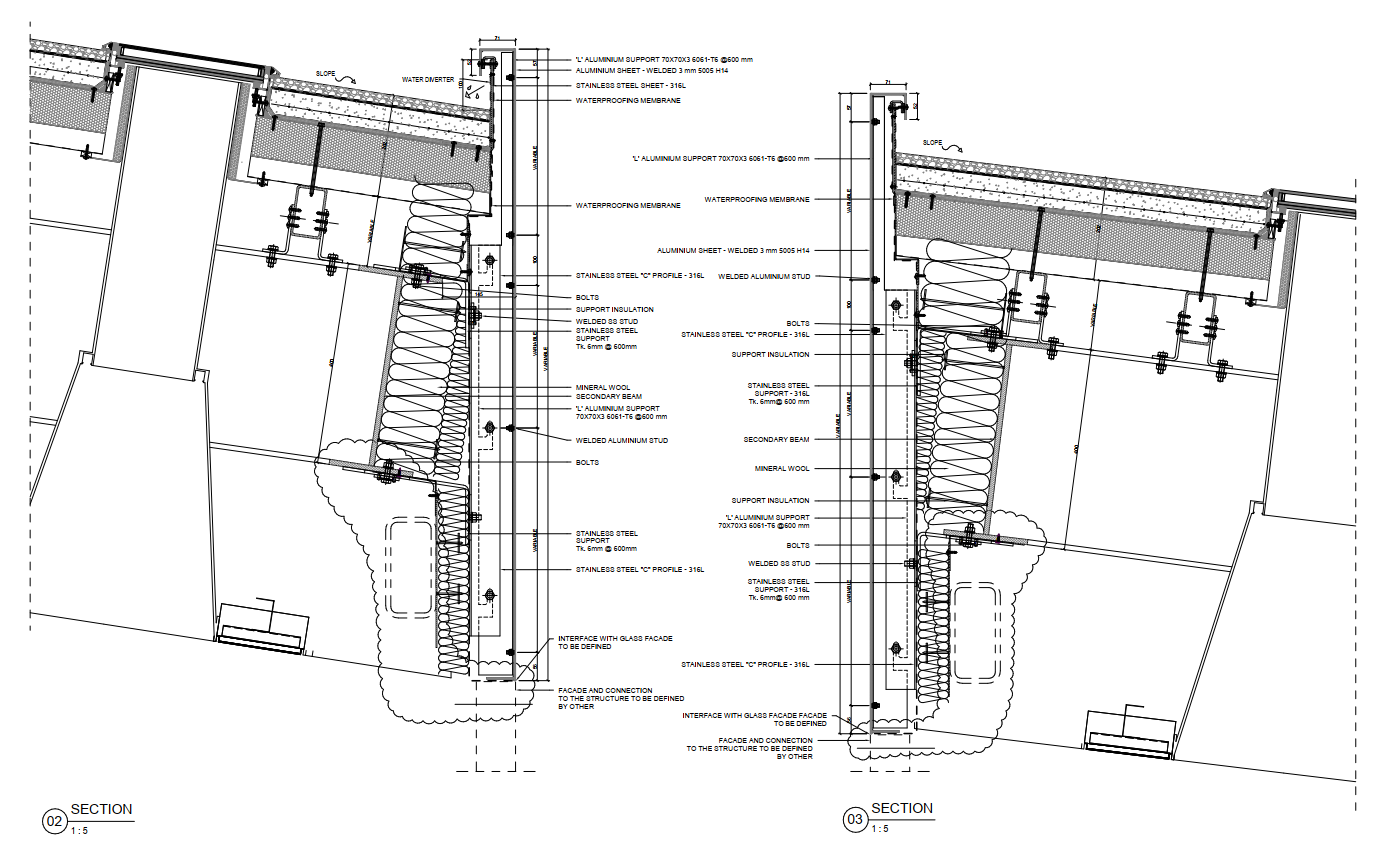
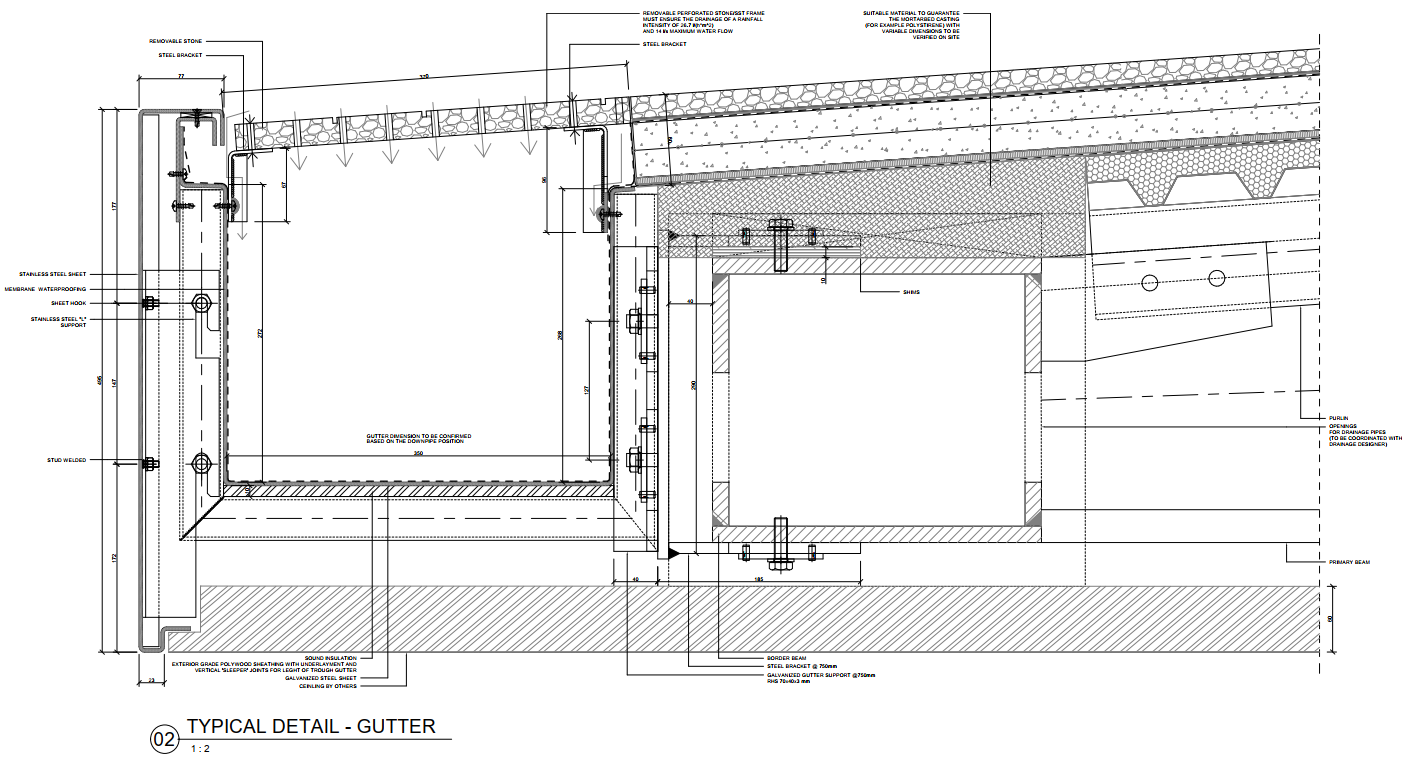
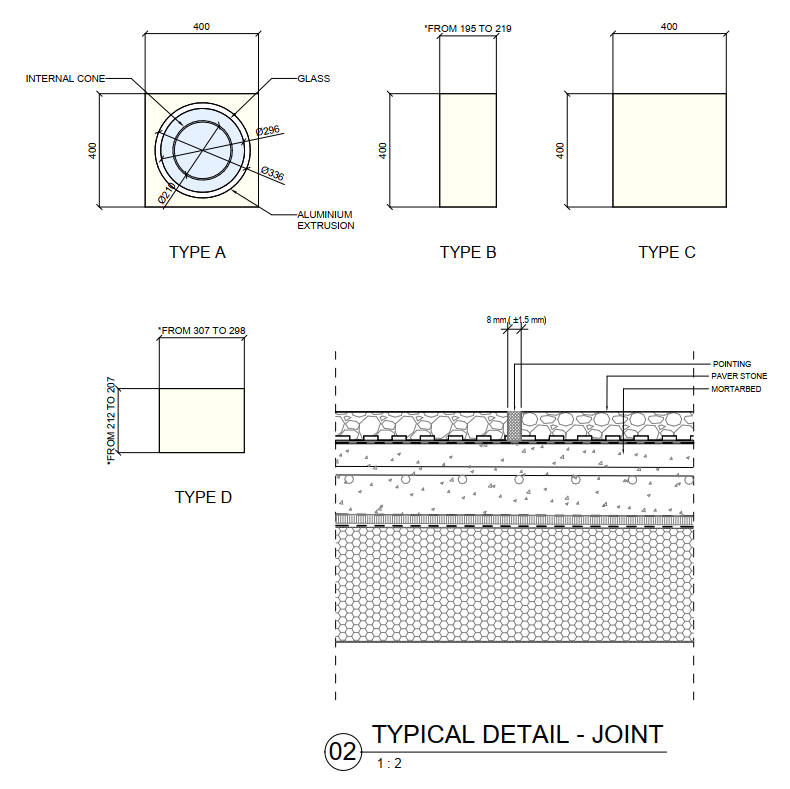
From the steel structure upward: steel framing → Kingspan insulated corrugated deck → waterproof membrane → drainage mat → filter fabric → mortar bed → stone tiles (pietra, flat stone flags). The stone is perforated where it meets the light cones. A gutter system collects rainwater entering through the cone openings and channels it away. The main oculus has its own bespoke cladding detail.
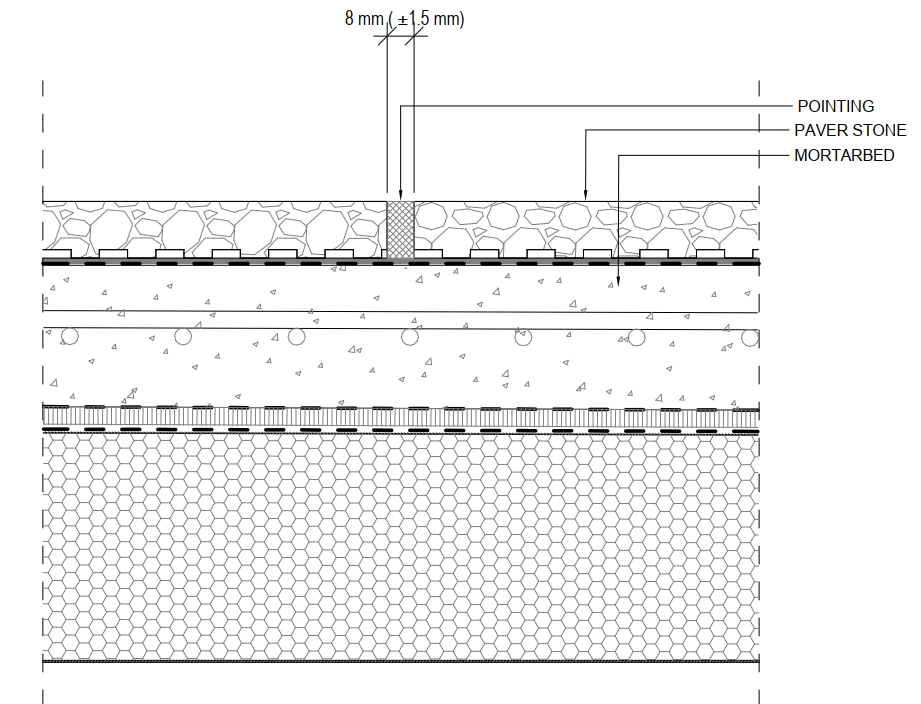
Cladding section
Cone cladding detail
Oculus detail
Gutter system
Tile layout
Stone tile placement

11 — Project Status

Built — Education City, Doha, 2022

Construction completed circa 2022. The building is a women's cultural and religious centre — a parish-type facility for religious study, community gatherings, and worship — located in Education City, Doha, Qatar.

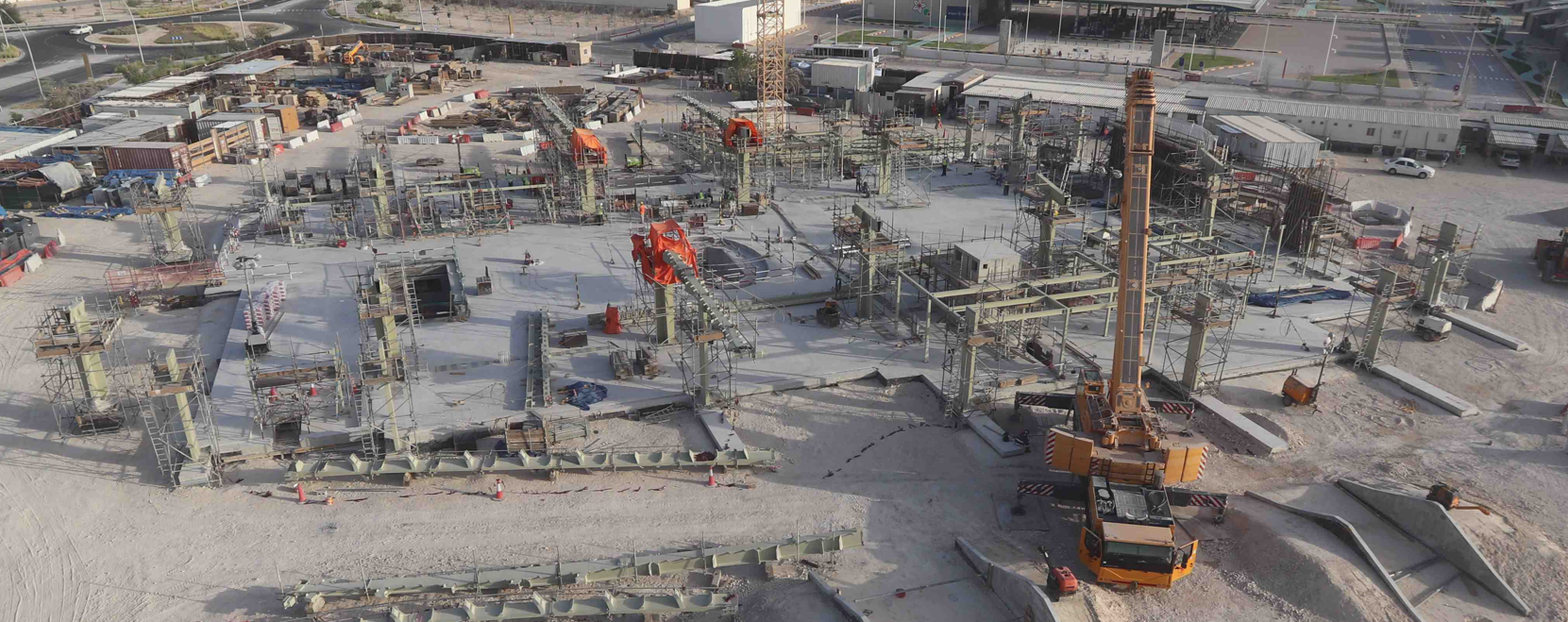
Construction site — structure
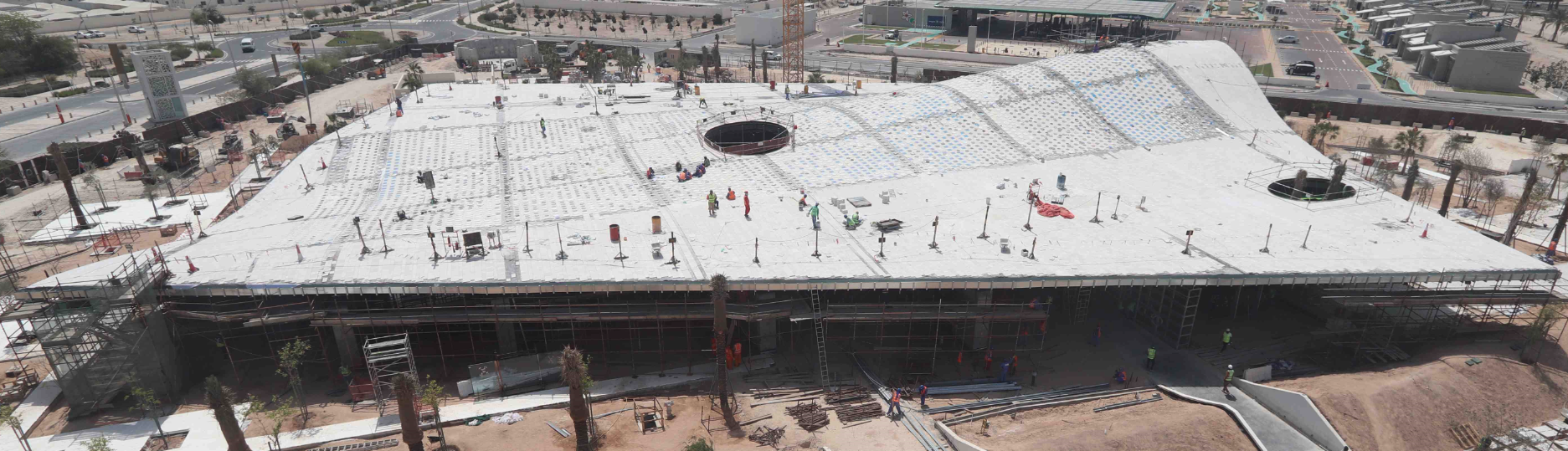
Construction site — roof
Construction site — completed

Maffeis Added Value

What made the difference

01

Deep knowledge of manufacturing ensured the constructability of the special steelwork structure — choosing welded V-beams over a prohibitively expensive machined space frame.

02

Understanding of steelwork and cladding technologies, as well as local subcontractor preferences, allowed a cost-competitive solution to be achieved where others could not bid.

03

One-single-model parametric approach — Rhinoceros + Grasshopper → Revit → SAP2000 → Tekla — ensured full coordination across disciplines with zero model duplication.